
Empirical assessment of cognitive, psychological, and functional concerns following workplace injury, to support informed clinical, occupational, rehabilitation, and claims-related decisions.


Jefferson Neurobehavioral Group provides comprehensive neuropsychological and psychological evaluations for workers’ compensation matters involving cognitive, emotional, behavioral, and functional concerns.
Workplace injuries can present complex questions about the nature and extent of reported difficulties, factors affecting recovery and functioning, and an individual’s ability to return to work or perform essential job duties.
Our evaluations provide data-driven, clinically grounded findings to help clarify these questions and support informed decisions regarding treatment, rehabilitation, work capacity, accommodations, and return-to-work planning.


Depending upon the referral question, a Workers’ Compensation evaluation may help determine whether cognitive or psychological impairment is present, and characterize the nature, extent, and severity of any such impairment.
The evaluation may examine how reported symptoms relate to cognitive, psychological, medical, or other factors; whether findings are consistent with the reported injury or condition; how current findings relate to any prior diagnoses or documented concerns; and the functional implications of the results for work and daily activities.
These data-driven findings may help clarify the relative contribution of injury-related and pre-existing factors, areas of preserved and impaired functioning, the consistency of reported difficulties with observed findings, and factors that may influence prognosis or recovery.
Workers’ compensation cases can involve complex medical, psychological, occupational, and administrative questions. Our role is to provide an independent clinical assessment responsive to the specific questions presented by the referral, with conclusions grounded in the available clinical evidence.
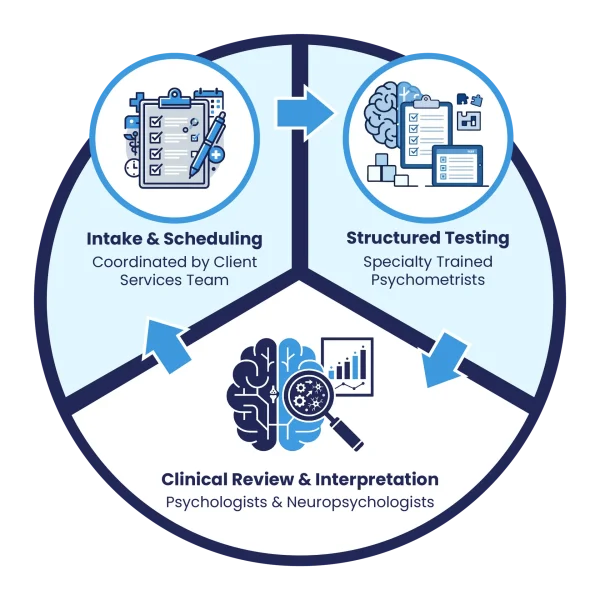
Evaluations may incorporate relevant records, clinical interview, standardized neuropsychological or psychological testing, behavioral observations, validity assessment when appropriate, and consideration of other relevant clinical and contextual information.
Findings are presented in a clear, comprehensive report designed to provide useful information to the professionals involved in the case.


Workers’ compensation evaluations can provide data-driven clinical information to professionals responsible for treatment, rehabilitation, claims management, and return-to-work planning.
Depending upon the referral question, findings may help inform decisions concerning functional limitations, work capacity, appropriate accommodations, treatment and rehabilitation needs, fitness for duty, and readiness to return to work. Jefferson Neuro works with physicians, attorneys, insurers, employers, case managers, rehabilitation professionals, and other referral sources to ensure the evaluation addresses the specific questions relevant to the case.
JNG works with defense and plaintiffs’ attorneys, physicians, insurers, employers, case managers, government agencies, and other referral sources. Contact us to discuss a case, determine the appropriate evaluation or professional service, or initiate a referral.
Jefferson Neurobehavioral Group provides comprehensive neuropsychological evaluations for adults, adolescents, and children across Louisiana and the Gulf South.
2901 N I-10 Service Road E
Suite #300
Metairie, Louisiana 70002
We use cookies and similar technologies to help keep our website secure, protect our forms from spam, display maps, and improve your experience. With your permission, we also use these technologies to measure the effectiveness of our advertising so we can better connect families with our services. You can accept all technologies, review your Cookie Preferences, or close this notice without accepting optional technologies.