


Changes in memory, attention, language, or thinking can be concerning, especially when they begin to affect daily life, independence, or overall functioning. These changes may be related to normal aging, medical conditions, neurological illness, or neurodegenerative processes—and understanding the cause is an important first step.
A comprehensive neuropsychological evaluation helps clarify whether cognitive changes are consistent with typical age-related patterns or if they reflect a more clinically significant decline. The evaluation can also help differentiate concerns related to medical history, mood factors, neurological conditions, mild cognitive impairment, or dementia.
At Jefferson Neurobehavioral Group, we conduct dementia and cognitive decline evaluations to define cognitive strengths and weaknesses, clarify the nature of reported cognitive concerns, and provide clear, objective clinical documentation to support medical decision-making and care planning.


Dementia and cognitive decline evaluations examine cognitive abilities and patterns of change across memory, attention, language, and executive functioning. The goal is to determine whether the pattern of findings is consistent with normal aging, mild cognitive impairment, or a neurodegenerative process.
The evaluation typically includes review of relevant medical records, a clinical interview to understand cognitive concerns and symptom history, and standardized neuropsychological testing to measure cognitive performance.
Areas commonly assessed include memory and learning, attention, processing speed, executive functioning, language abilities, visuospatial skills, and reasoning.
Evaluation reports provide clear, objective findings that assist physicians, specialists, and families in medical planning, care coordination, and ongoing clinical decision-making.

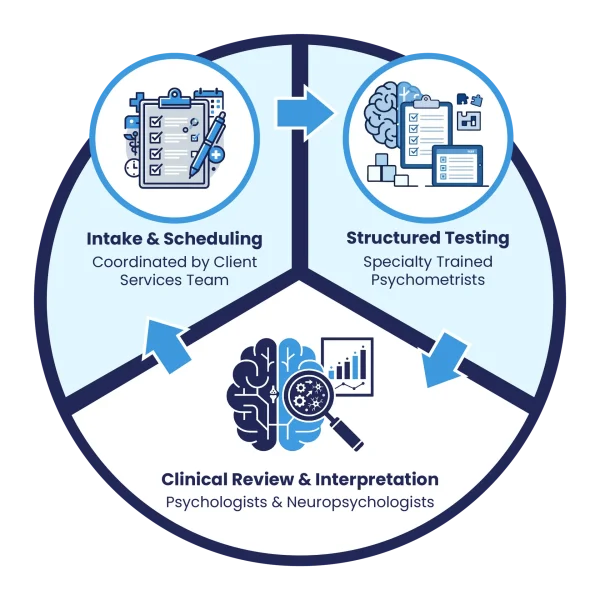
At Jefferson Neurobehavioral Group, all evaluations follow a structured model in which licensed psychologists and neuropsychologists lead clinical review and interpretation, specialty-trained psychometrists administer standardized neuropsychological testing, and our client services team coordinates scheduling, intake, and communication throughout the process.
This model supports thorough, efficient, and well-coordinated evaluations from intake through final report.
Jefferson Neurobehavioral Group provides comprehensive neuropsychological evaluations for adults, adolescents, and children across Louisiana and the Gulf South.
2901 N I-10 Service Road E
Suite #300
Metairie, Louisiana 70002
We use cookies and similar technologies to help keep our website secure, protect our forms from spam, display maps, and improve your experience. With your permission, we also use these technologies to measure the effectiveness of our advertising so we can better connect families with our services. You can accept all technologies, review your Cookie Preferences, or close this notice without accepting optional technologies.