


Pain—whether acute, recurrent, or persistent—is often influenced by overlapping medical, cognitive, and psychological factors. Individuals experiencing pain may report changes in attention, memory, mental stamina, and day-to-day functioning, particularly when symptoms occur alongside other medical conditions.
A comprehensive pain psychology evaluation helps clarify the relationship between reported symptoms, cognitive and psychological factors associated with pain, and can help distinguish cognitive changes related to pain from other contributing medical or psychological factors.
At Jefferson Neurobehavioral Group, we conduct Pain Psychology evaluations to clarify the nature of reported symptoms, assess cognitive and psychological factors related to ongoing pain, and provide clear, objective clinical documentation.
Pre-Procedure Pain Psychological Evaluation – If you require surgical or implantable pain management procedures for your pain problem, your doctor may request a pain psychology evaluation to understand your likely response to surgery and other efforts to treat your pain.


Pain Psychology evaluations examine reported symptoms, medical history, and day-to-day challenges to understand how ongoing pain may influence attention, memory, mental stamina, and everyday activities.
The evaluation typically includes review of relevant medical history and pain history, a clinical interview to understand symptoms and their impact on daily life, and standardized neuropsychological testing to measure cognitive performance.
Areas commonly assessed include attention, memory, processing speed, and executive functioning, along with consideration of psychological and emotional factors that may influence symptom experience.
Evaluation reports provide clear, objective findings that can be used by healthcare providers, rehabilitation teams, attorneys, and other professionals involved in care, documentation, or decision-making.

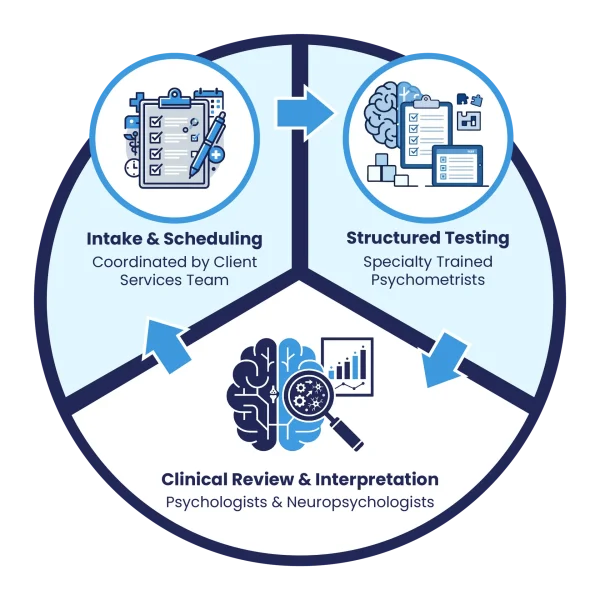
At Jefferson Neurobehavioral Group, all evaluations follow a structured model in which licensed psychologists and neuropsychologists lead clinical review and interpretation, specialty-trained psychometrists administer standardized neuropsychological testing, and our client services team coordinates scheduling, intake, and communication throughout the process.
This model supports thorough, efficient, and well-coordinated evaluations from intake through final report.
Jefferson Neurobehavioral Group provides comprehensive neuropsychological evaluations for adults, adolescents, and children across Louisiana and the Gulf South.
2901 N I-10 Service Road E
Suite #300
Metairie, Louisiana 70002
We use cookies and similar technologies to help keep our website secure, protect our forms from spam, display maps, and improve your experience. With your permission, we also use these technologies to measure the effectiveness of our advertising so we can better connect families with our services. You can accept all technologies, review your Cookie Preferences, or close this notice without accepting optional technologies.